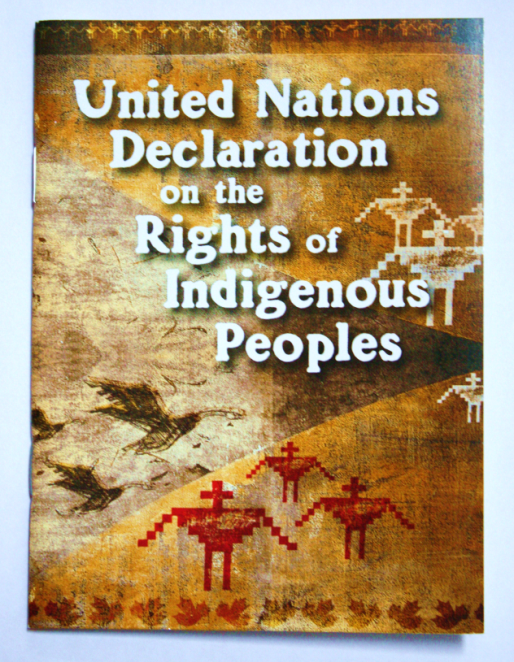
 On September 13, 2007, the UN General Assembly adopted the United Nations Declaration on the Rights of Indigenous Peoples. This universal human rights instrument is a symbol of hope for the world’s 370 million indigenous people. It took 20 years of international negotiations to create this human rights instrument. Yet, the fun has only begun! A shared vision is one thing. Implementation of that vision is another.
A couple of days ago I attended a local (Victoria) community meeting, about the Declaration. The Declaration is so relevant where I live; given the historical influence of, and unresolved issues with, local (indigenous) Aboriginal peoples. The evening was facilitated by Margaret Smart of Aboriginal Neighbours, an organization of aboriginal and non-aboriginal people who build bridges of respect and understanding between cultures, through education and interaction. Jennifer Preston, from the Canadian Friends Service committee (CFSC) , a Quaker organization, led the conversation around the Declaration.
Jennifer was actively involved in the intensive lobbying efforts to ensure the successful adoption of the Declaration at the UN in both Geneva and New York. In this context, she has worked closely with the Indigenous Peoples Caucus, state (nation) representatives, and human rights organizations in various regions of the world. Now she’s traveling and advocating for its implementation! I love how she is so passionate when she talks about what the Declaration represents. At the end of a long, tiring evening, she had still some reserves left to allow me to capture a few of her thoughts on video
(if this video is not displaying properly on your browser, click here to watch it from YouTube)
Here’s a few of Jennifer’s thoughts around implementation of the Declaration, as she touches on in the video:
- Effective implementation starts with making the Declaration known. On that front, CFSC (with many partners) produced a nifty pocket-sized booklet about the Declaration (see photo I of it at the top of this post contact CFSC for a copy). The Declaration is concise and easy to read a great starting point for sharing and engaging on the subject at heart.
- Public and corporate entities need to affirm the Declaration in policy.
- Indigenous rights needs to be part of our daily curriculum, and become part of the important conversations that move us forward, collectively, to being a fairer nation.
- Persons in authority (think elected officials) need to be held accountable.
The Declaration is the result of a humongous exercise in collaboration and consensus building. Leaving aside the sad fact that my country was one of only 4 countries (out of 159 voting countries) to vote against the Declaration, the Declaration must still be implemented on the ground by individual nations and communities. And that is the big challenge an agreement covering so many countries must, to a degree, be general in wording. And so it remains with each country/community to find their own way of bringing the Declaration to life. (And on the topic of implementing consensus agreements, there is some good stuff on John Folk-William’s Cross Collaborate blog).
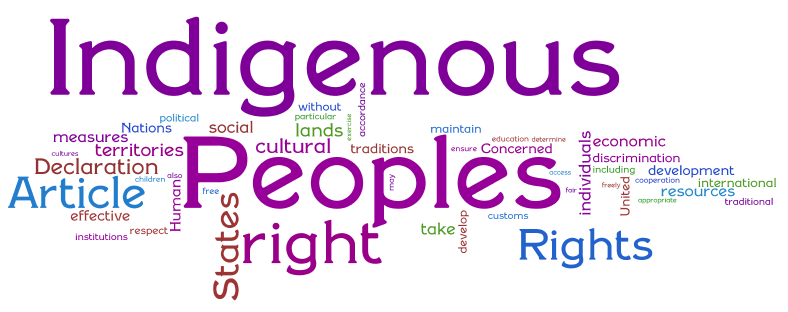
For a visual, I created a Wordle diagram of the 50 most commonly used words in the Declaration’s text (note: size of word is proportional to number of occurrences). Makes me realize how it can take 20 years to create a consensus when there is so much territory to cover!
Want to know more about the Declaration? Go here.
What’s your idea for implementing the Declaration? Please leave a comment here. Thanks, Ben.

I found your blog on Google and read a few of your other posts. Keep up the good work. Look forward to reading more from you in the future.
Thanks for checking my blog out.
I am an indy filmmaker making a film which I will be posting on the internet for free and selling for two dollars.
May I use your wordie about the Delaration on Human Rights to introduce the declaration in a film about indigenous rights? THANK YOU
YOU WROTE:
For a visual, I created a Wordle diagram of the 50 most commonly used words in the Declarations text (note: size of word is proportional to number of occurrences). Makes me realize how it can take 20 years to create a consensus when there is so much territory to cover!
Dorothy, feel free to use the Wordle. Thanks for asking. Good luck with your film.